电子液体香料中的隐藏热降解及其控制方法
作者: 翠盖调味研发团队
出版: 广东独特风味有限公司
最后更新: 2025年10月17日
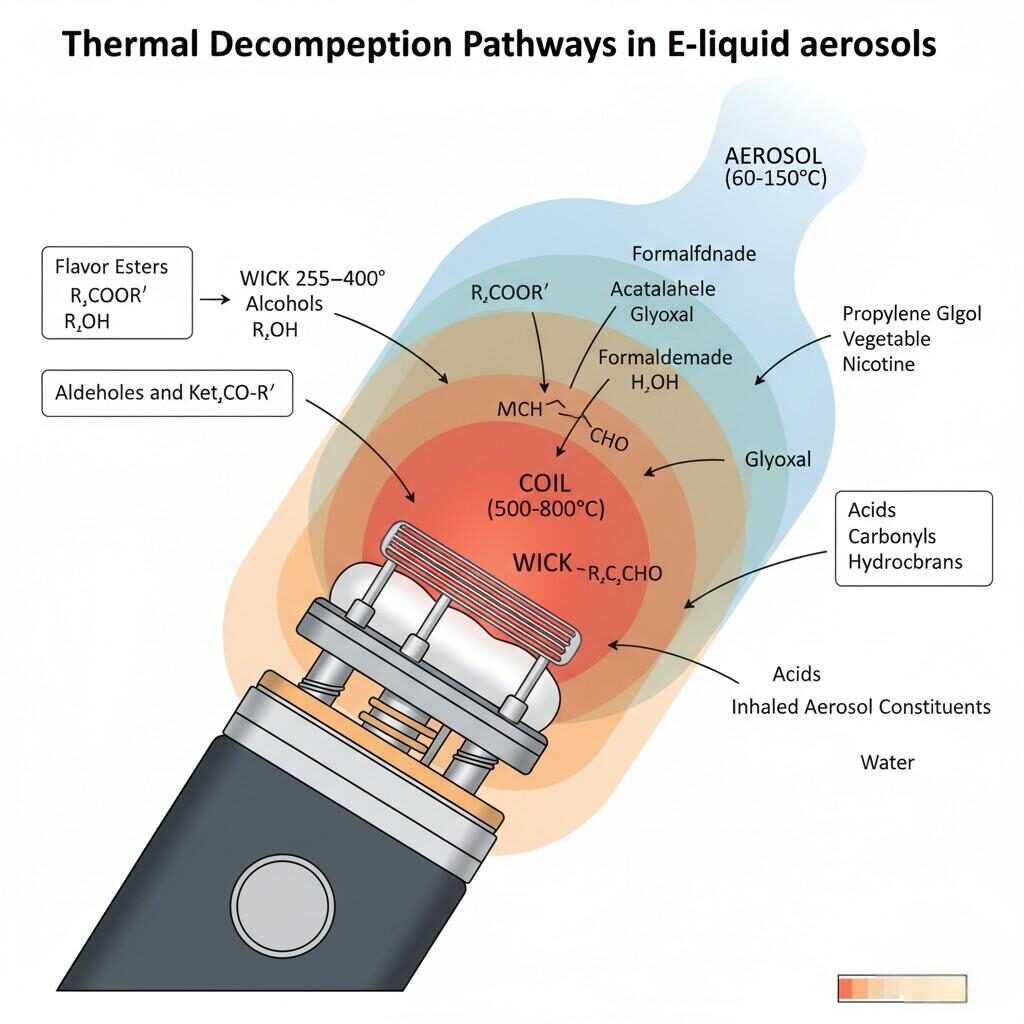
电子液体热分解
引言
在电子液体开发领域,广泛关注风味效果、尼古丁输送、喉感及保质期的稳定性。然而,一个隐匿且常被低估的因素是 thermal degradation在蒸发过程中风味化合物的变化。由于风味分子被加热——有时高达数百摄氏度——它们的一部分可能 break down,产生新的化合物,其中一些可能是刺激物、毒素或不良的风味副产物。这种隐性降解可能削弱风味的忠实度,产生异味,增加刺喉感,甚至导致有害排放。
作为电子液体风味的制造商,尤其是在加热驱动设备(电子烟、胶囊系统等)中,您必须设计不仅具有香气和液体稳定性的风味系统,还要考虑 resilience under thermal stress微小的化学变化——结构断裂、重排、氧化——都可能显著改变感知的风味、刺激性或安全性。
本文将深入探讨:
- 电子液体中风味分子的热降解机制及途径
- 影响降解速率和程度的因素
- 检测隐藏降解的分析与预测方法
- 减缓或控制热降解的策略
- 研发流程与最佳实践
- 实例、案例研究与未来展望
凭借此内容,你的风味团队将更有能力应对相关挑战 preempt and control hidden thermal degradation确保您的风味在实际使用中保持纯净、安全,并忠于其预期的特性。
1. 热降解的机制与途径
当风味化合物在蒸发过程中受热时,可能发生多种化学转化——有些微妙,有些显著。理解这些路径,对于设计更为稳定的风味体系至关重要。
1.1 热解、氧化、重排、断裂
Pyrolysis是在高温下化学键的热裂解,通常在低氧或惰性环境中。一些风味分子,尤其具有双键、芳环或易裂的取代基的分子,可能在热解压力下碎裂或重排。
Oxidation是与蒸气路径或设备环境中残留的氧气(或活性氧种)反应。即使微量的氧气或金属催化剂也能加速氧化,形成羰基、过氧化物、环氧化物或羧酸衍生物。
Rearrangements包含分子内迁移(例如通过自由基或离子中间体),将一种结构异构体转变为另一种,有时伴有微妙的香气变化。
Fragmentation产生较小的分子碎片——醛、酮、酸、酚,甚至芳香烃——可能带有不良气味或反应性。
因此, vapor may contain molecules not originally present in the liquid,其中一些可能引起刺激或有害。
对90种风味化学品进行热降解筛查的研究发现,虽然许多成分以95%以上的完整比例转移,但仍有许多产生数十种降解产物(即使作为微量成分)。
此外,基础溶剂(丙二醇、甘油)在加热条件下自身也会降解成甲醛、乙醛和丙烯醛等醛类,增加挥发性羰基的背景负荷。
1.2 风味类别的易感性:萜烯、醛类、酯类、配糖体
并非所有风味类别在加热下都同样脆弱。以下是一些关键观察:
- Terpenes / monoterpenes:这些化合物特别易于氧化和重排。例如,α-蒎烯和扁柏烯在100–300°C下发生环开、环氧化、重排和断裂反应。牛等人在模拟线圈加热的蒸气环境中分别鉴定出36和29种反应产物。
- Aromatic aldehydes / cinnamaldehyde / eugenol:在高温条件下,这些化合物可能进一步氧化或分解,产生甲醛、乙醛,有时还会生成苯。2022年的气溶胶研究显示,温度升高时,肉桂醛和薄荷醇的燃烧会显著增加甲醛和乙醛的生成。
- Esters and esters of volatile acids:酯类物质易受水解(如果存在微量水分),也容易在高温下热解成醇和酸片段。
- Glycosides / sugar derivatives:在加热条件下,糖苷键可能断裂,糖类可以降解为呋喃类、羟甲基呋喃(HMF)等物质。
- Alcohols and solvent–flavor interactions:某些酒精类物质在加热时可能部分氧化或与风味自由基相互作用。
总之,含有不饱和键、芳香体系或易碎取代基的风味分子面临更高的隐藏降解风险。
1.3 装置环境的作用:温度梯度、氧气、金属催化
实际电子烟设备中的热降解并非均匀分布。多种微环境因素会加剧潜在的降解隐患:
- Temperature hotspots:加热线圈可能存在局部热点,特别在干燥或低湿润条件下。这些热点温度可能超过平均线圈温度,触发局部降解反应。
- Transient over-power / voltage spikes:在不稳定的电源系统中,瞬时电压波动可能短暂升高温度,促进降解反应。
- Residual oxygen / radicals:少量环境氧气(或引入的空气)可以促进氧化反应,尤其在具有空气进气的设备中。一项外部调节研究显示,氧气和微量金属离子的存在促进电子液体在加热条件下的氧化。
- Metal catalysis and coil material:镍铬合金、不锈钢或其他合金可能催化自由基反应,加快降解过程。表面金属(如铁、铜)可促进氧化还原循环,生成活性氧种。
- Dwell time / puff duration:延长吸烟时间增加热滞留时间,使较慢的降解途径得以表现。
- Wick saturation, liquid film, and vapor boundary layers:饱和度不足或形成薄膜沸腾的情况下,可能导致线圈附近的风味化合物部分热解。
由于蒸发环境具有动态性和空间异质性, hidden degradation may occur in microdomains即使整体温度看似安全。
2. 影响降解速率与程度的因素
要应对潜在的降解,就必须洞察影响风味分子在使用过程中降解程度的关键因素。以下列出主要变量及其相互关系。
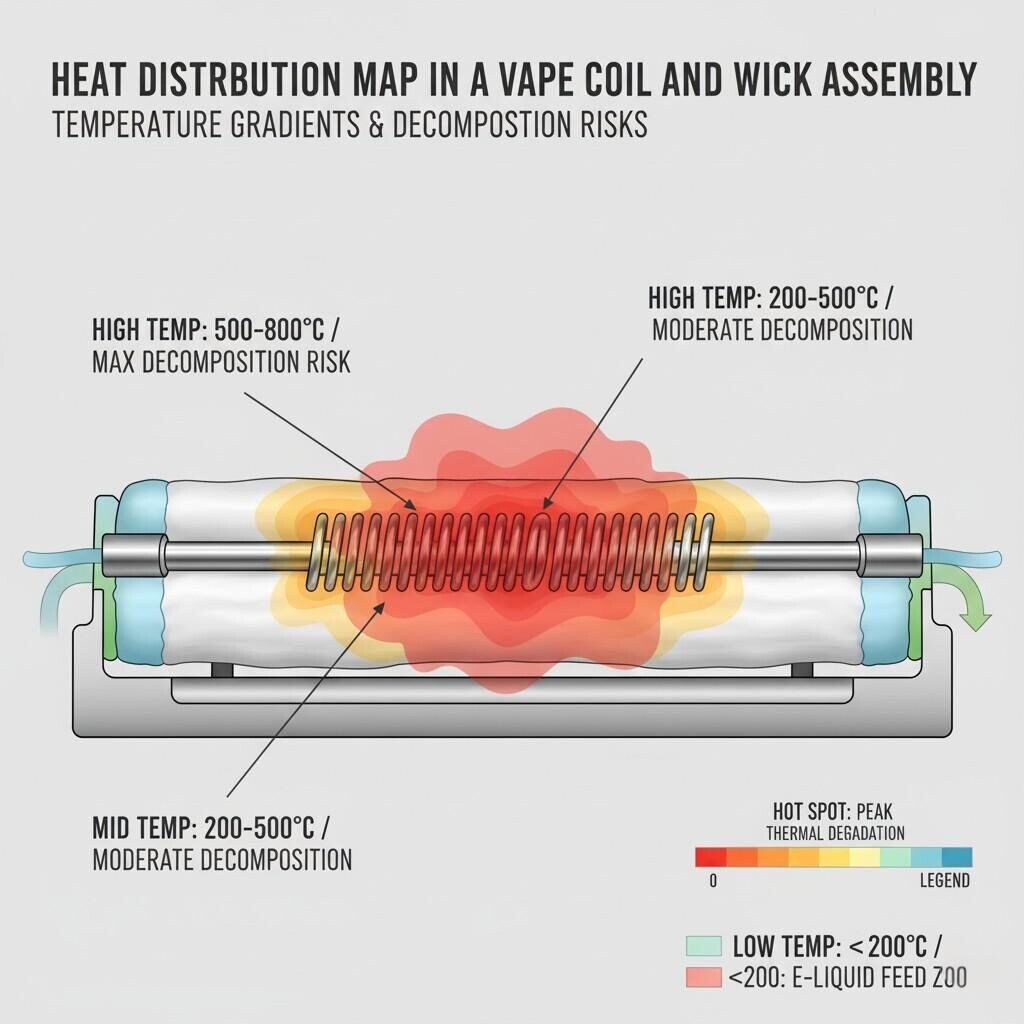
电子烟线圈温度分布图
2.1 活化能、键强度与分子结构
键解离能(BDE)越高或结构越稳定的化合物,越具抗热性。未饱和键、弱连接、稳定自由基的取代基或共轭体系,或能降低激活能,从而增强耐热性。由此可见:
- Saturated, stable molecules倾向于抗碎裂。
- Conjugated or aromatic systems可能稳定自由基,但也可能促使重排或共振驱动的断裂。
- Electron-donating substituents可能降低相邻键的键能,增强反应活性。
- Steric hindrance / molecular rigidity通过限制构象运动,减缓分解过程。
因此,在风味分子的选择中,应偏好具有 higher thermal resilience具有较高激活能的结构,避免具有已知易断键的结构。
2.2 浓度、挥发性与局部分压
- Higher concentration某种风味的增加会提升其在蒸气区域的分压,从而促进更多反应路径或自由基相互作用。
- Volatility:挥发性较强的化合物在线圈附近的蒸气相中停留时间更长,更易受到降解。
- Local boundary layer concentration gradients:靠近线圈的区域,局部高浓度可能形成反应性更强的微区。
因此,减少风味添加量或采用挥发性较低的类似物,有助于降低热分解风险。
2.3 溶剂基质(丙二醇/甘油比例、水分含量、添加剂)
风味所处的基质能调节其降解行为:
- PG vs VG:丙二醇(PG)比植物甘油(VG)更易降解为活性酮类,增加氧化负担。平衡或以VG为主的基质有助于缓冲热应力。
- Water content / humidity:微量水分可以催化水解反应或促进自由基的扩散。
- Additives / stabilizers:溶剂系统中的抗氧化剂、自由基清除剂、金属螯合剂或酸缓冲剂可以抑制降解级联反应。
- Ionic strength / salts:离子添加剂可以影响自由基路径或导电性及催化作用。
谨慎管理基础基质的组成对控制隐藏降解至关重要。
2.4 吸烟参数、停留时间与使用习惯
- Puff duration and volume:吸烟时间越长,风味分子暴露在高温下的时间越久。
- Inter-puff interval:吸烟间隔过短可能无法充分冷却,导致热应力累积。
- Power / wattage setting:更高的功率明显提高线圈温度,加快降解反应速度。
- Draw resistance & airflow气流减弱(吸阻紧密)不仅延缓冷却,还加剧边界层的升温。
在配方设计中,除了常规使用外,还应考虑“应力场景”(长吸、高功率)。
3. 检测隐性降解的分析与预测方法
由于隐藏的热降解可能不会在未加热的液体中表现出来,您需要专业的分析策略和预测工具来检测和量化它。
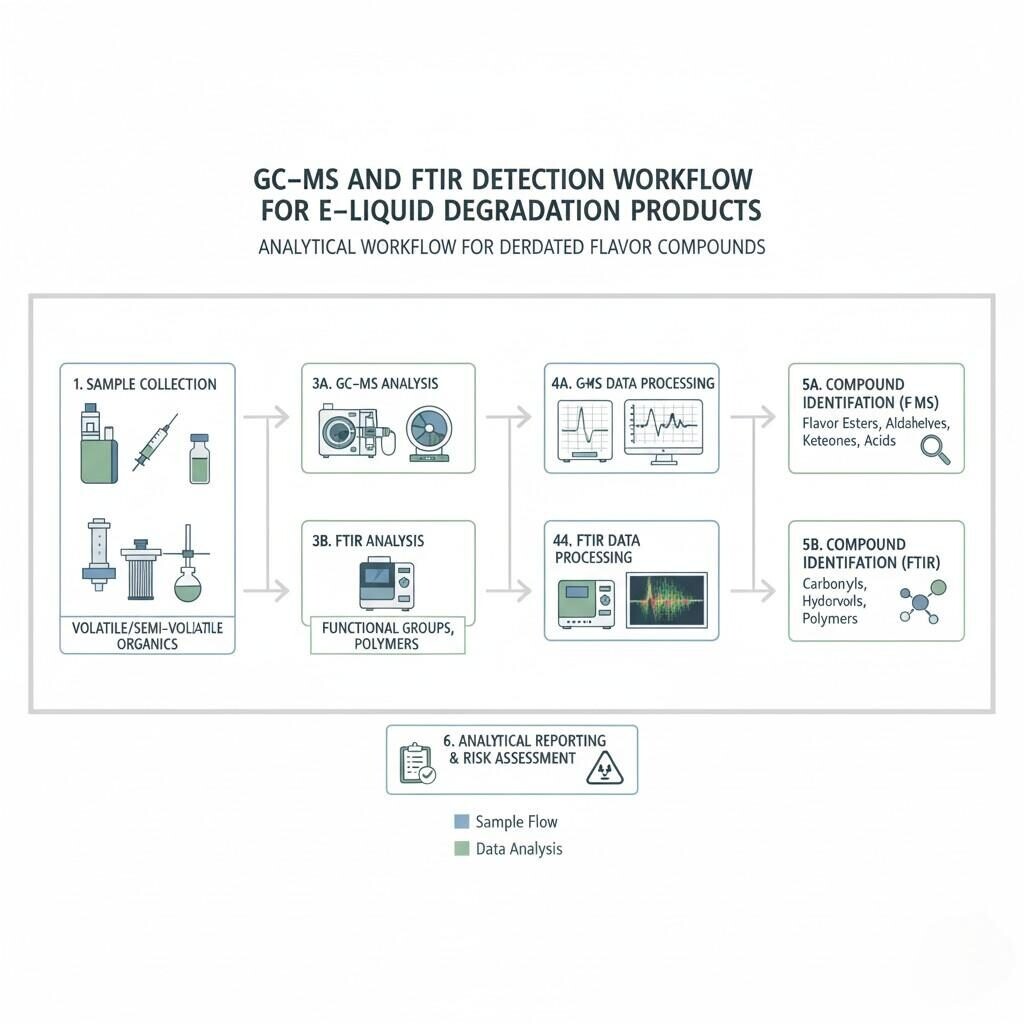
电子液体降解检测流程
3.1 热降解筛查设备(热解仪+气相色谱-质谱)
一种黄金标准是 pyrolysis unit coupled with GC/MS采用热解-色谱/质谱(TD-GC/MS)模拟线圈加热并分析分解产物。例如,Oldham等人使用模仿电子烟线圈条件的热解仪筛选了90种风味化学品,定量测定乙醛、丙烯醛、环氧丙二醇及非目标降解物。
关键步骤:
- 将基质中的风味暴露于受控的升高温度(例如275–475°C)下
- 收集气态分解产物
- 通过气相色谱-质谱、质谱或非靶向扫描进行分析
- 比较残留的母体化合物与新形成的产物
这为你提供了风味的降解曲线及其在实际使用中可能的退化估算。
3.2 实际吸烟条件下的气溶胶表征
尽管热解气相色谱(pyro-GC)具有实用价值,但实际设备测试更具真实性。应利用受控的电子烟装置收集气溶胶,并进行分析:
- Volatile byproduct burdens:醛类、酮类、酸类、多环芳香烃(PAHs)
- 气相和颗粒相的降解产物
- 加味与未加味电子液体的对比
例如,研究发现,通过雾化,肉桂醛和薄荷醇在高温条件下会产生更多的甲醛和乙醛。 PubMed
3.3 预测模型与机器学习
最新进展结合化学信息学与机器学习,预测热解反应性:
- 研究领域 Scientific Reports采用图卷积神经网络(GCN)预测180种风味化学品的可能热解途径。模型生成了数千个候选降解产物,其中许多与实验质谱证据具有统计相关性。
- 其他方法则采用预测毒性分类,预测降解产物可能引起刺激或健康风险。
这些预测模型能在实证测试前筛选风味候选,提升效率。
3.4 差示热分析、热重分析(TGA)/差示扫描量热(DSC)技术
诸如……的技术 Thermogravimetric Analysis (TGA)以及 Differential Scanning Calorimetry (DSC)可以提供热稳定性“指纹”特征:
- 热重分析(TGA)显示在特定温度范围内的质量损失(表明分解过程)。
- 差示扫描量热图(DSC)显示放热或吸热转变,可能对应分解的开始。
通过比较风味化合物或混合物,您可以识别出热稳定性较低的成分。
3.5 感官与官能评估验证
最后,将分析结果与之相关联 sensory assessment:
- 比较加热应力前后(如加热样品或陈放蒸气)风味强度和异味表现
- 进行对比评估:新鲜样品与“预热”样品
- 味觉或“喉感”测试,用于检测微妙的刺激物
这些方法结合起来,提供了关于隐藏热降解风险的整体视角。
4. 降低与控制热降解的策略
考虑到潜在的隐藏降解,您的配方选择在减缓其发生中起着关键作用。以下是一些可行的策略。
4.1 选择热稳定性强的风味分子
- 优先选择饱和且稳定的化合物,避免高度不饱和或官能化程度高的化合物。
- 采用已知抗碎裂的类似物或衍生物(如氢化萜烯、稳定酯类)。
- 除非必要,否则应避免具有弱键的分子(如易裂的醚或烯丙基系统)。
4.2 降低风味负荷,稀释高风险类别
- 使用 minimum effective concentration减少暴露的各种风味。
- 特别是对于热敏感类别(萜烯、醛类),应减少用量或采用更稳定的部分替代。
- 使用 flavor stacking:采用多种小剂量化合物的组合,而非单一高浓度成分。
4.3 添加抗氧化剂、自由基清除剂与稳定剂
- Antioxidants例如,抗坏血酸衍生物、BHT和生育酚类类似物可以减缓风味的氧化过程。
- Radical scavengers例如,阻滞酚类物质可能在进一步降解前中和中间自由基链。
- Metal chelators例如,EDTA衍生物和螯合配体可以减少微量金属引起的催化降解。
- Acid or buffer stabilization:微酸性环境可能不利于自由基级联反应。
所有添加剂必须经过吸入安全性和法规合规性评估。
4.4 优化溶剂基质与水分控制
- 使用 VG-rich or balanced PG/VG用于降低丙二醇氧化引起的背景热应力的比例。
- 减少电子液体中的水分或湿度(例如低于0.1%),以降低水解途径。
- 控制可能催化分解的离子含量或盐类。
4.5 硬件设计:调控温度、停留时间与气流
- 限制线圈的最高温度(例如通过功率限制或温控)。
- 设计灯芯和液体流动,以防止干燥灯芯或局部过热。
- 确保充足的气流(冷却),以带走自由基或反应性物质。
- 采用能减缓边界层停滞的雾化器结构设计。
- 避免过度功率或工作周期对风味系统造成压力。
4.6 脉冲或分段加热设计(适用于高级系统)
一些先进设备允许 pulsed heating或采用阶梯式功率曲线。您可以:
- 以较低功率预热,先蒸发溶剂,减少自由基负荷
- 采用阶梯式升温策略,减少对风味分子的瞬时热冲击。
- 设计具有分阶段挥发的风味系统(低挥发性核心和高挥发性顶香)
此方法有助于降低瞬时热应力。
4.7 包封或微胶囊技术
微胶囊技术可以保护风味分子,防止其在蒸发前受到直接热暴露:
- 选用热稳定的包覆基质(如二氧化硅、脂质壳层),仅在特定温度下降解
- 包封高敏感性化合物,逐步释放
- 共同包封稳定剂与风味,以保护反应位点
包封技术更为复杂,但提供了有效的缓解途径。
5. 研发流程与最佳实践
在风味设计流程中,系统性地考虑潜在热降解,须遵循一套严谨的工作流程。
5.1 第一阶段:预筛选与候选筛查
- Molecular screening:利用化学信息学评估潜在的风味分子(如键能、结构脆弱性)。
- TGA/DSC screening:进行早期热稳定性测试,以识别易降解的分子。
- Predictive modeling:利用机器学习或热解模拟工具预测潜在的降解产物。
- 在配方之前排除高风险候选人。
5.2 第二阶段:台式配方与热应力模拟
- 以标称浓度创建风味混合样品。
- 受制于 thermal stress例如,在80至120摄氏度条件下加热数天,或模拟线圈加热的短脉冲。
- 利用热解气相色谱-质谱(pyro-GC/MS)检测降解产物及母体损失。
- 比较“轻度应力”与“高应力”下的风味变化,以理解降解动力学。
5.3 第三阶段:设备级气溶胶测试
- 采用标准设备及不同功率、吸入时间的吸烟方案进行测试。
- 收集气溶胶,进行气相色谱-质谱或羰基捕获,评估副产物形成。
- 对比加味与空白电子液体,以识别与风味相关的降解。
- 进行感官检测,识别异味或喉感增强的问题。
5.4 第四阶段:反复试验与优化
- 如果降解产物超出阈值,应重新设计(减少用量、替代分子、添加稳定剂)。
- 对更新版本进行全部前期步骤的重测。
- 记录容差范围、降解余量和安全使用期限。
5.5 第五阶段:长期验证与稳定性
- 在应力和常温条件下进行保质期测试。
- 定期模拟雾化过程,并检测降解产物随时间的增加。
- 随着风味纯度或基质的变化,监测潜在的降解途径是否出现。
- 建立您的风味系列的降解风险模型。
各个环节应结合感官验证,以确保减缓策略不会削弱理想的风味释放。
6. 案例研究与示例说明
6.1 案例:α-蒎烯(萜烯)降解
牛等人在原位热解条件(100–300°C,可变O₂浓度)下研究α-蒎烯,识别出数十种反应产物(开环、重排、氧化化合物),其相对浓度受温度和氧气影响。
这凸显了在添加单萜类化合物时的风险,尤其是在高功率、长吸烟时间或空气暴露较多的设备中。
6.2 案例:肉桂醛/薄荷醇在高温下的行为
在雾化实验中,研究人员发现,在较高温度设置下,肉桂醛和薄荷醇显著增加了甲醛和乙醛的水平,甚至在某些情况下还增加了苯。
因此,即使是“温和”的风味添加剂,在极端条件下也可能生成有害副产物。
6.3 案例:功率水平引发的分解
在一项关于多种功率设置下电子烟设备的研究中,内山等人观察到热分解产物随瓦数变化:功率越高,醛类产物越多,且根据品牌和加热曲线,出现不同的风味相关分解产物。
这彰显了在预期设备功率范围内设计稳健风味系统的重要性。
6.4 预测与经验的协调
岸本等研究中基于图卷积网络(GCN)的预测模型预估了大量热解转化;结合质谱碎片数据后,发现大部分与实际产物离子相符,验证了该预测方法的有效性。
这表明结合计算机模拟筛选与实测手段,能加快风味候选的风险评估过程。
7. 实用指南与调味工程师建议
以下是一套汇总的指导方针,帮助您的团队做出决策:
- Always screen for thermal stability early——不要等到后期配方阶段再行动。
- Minimize flavor load在可能的情况下。
- Favor thermally stable classes较少的不饱和度和刚性结构。
- Include antioxidants, radical scavengers, and metal chelators在允许范围内。
- Control solvent matrix:偏好VG或平衡的PG/VG,减少水分含量。
- Design device usage margins:避免极端的功率或吸烟方式。
- Test edge-use cases:长吸、功率突升、部分饱和状态。
- Monitor shelf-aging impacts:陈化液体会产生更多的降解产物吗?
- Document safe operating windows:为每种风味配方设定最大推荐功率或吸烟时长。
- Use predictive modeling降低经验性工作负担。
- Perform comparative testing vs competitor benchmarks确保您的产品在实际使用中依然安全。
8. 摘要与结论
电子液体香料的隐藏热降解是一个容易被忽视的关键风险因素。尽管液体稳定性常受到关注, the real test is performance under heat微观的化学变化——键断裂、氧化、重排——可能不立即被察觉,但随着时间推移或在压力条件下,可能引起异味、刺激或有害排放。
通过应用机理理解,利用先进的分析技术(热解气相色谱、机器学习预测),以及设计具有固有热稳定性的风味系统(分子选择、稳定化、硬件感知限制),风味制造商可以大幅降低隐藏降解的风险。
我们的建议和案例洞察为构建提供了路线图 flavor lines that remain true, safe, and clean under real-world vaping conditions.
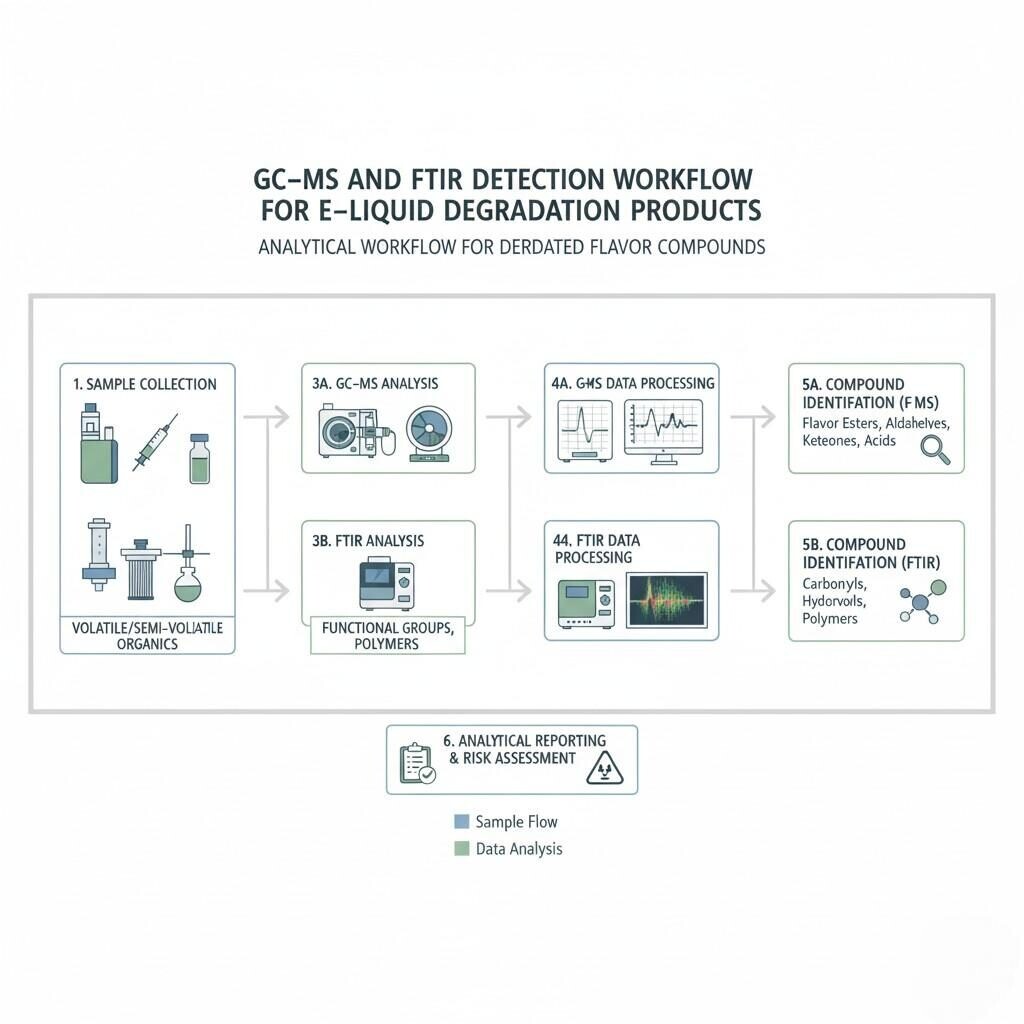
电子液体降解检测流程
行动呼吁
是否希望合作开展 共同开发热稳定的风味原型,或请求 免费样品我们抗降解风味系列的产品?我们的团队已准备好进行技术交流和定制配方支持。请随时联系我们。
📩 [信息@翠怪味.com]
📞 [+86 189 2926 7983]
🌐 探索更多内容【www.cuiguai.com】


